Manufacturing cars at volume appears to be a relic of another age. Getty Images

How automotive industry became more profitable in midst of car-supply crisis


  • English
  • Arabic

Since it was first produced in 1976, the Ford Fiesta has regularly topped bestseller charts because of its affordability, availability and reliability.

Yet, in an extraordinary twist, an automotive expert has told The National the previously ubiquitous model now comes with a 12-month wait in the UK.

Unsurprisingly, it is now nowhere near the UK top sellers list for 2022 to date. It's a far cry from the slogan of mass production pioneer Henry Ford, who promised buyers any car they wanted (as long as it was black).

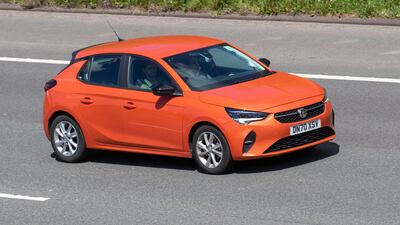
  • 1. Vauxhall Corsa - 9,797. Alamy
    1. Vauxhall Corsa - 9,797. Alamy
  • 2. Kia Sportage - 8,697. AFP
    2. Kia Sportage - 8,697. AFP
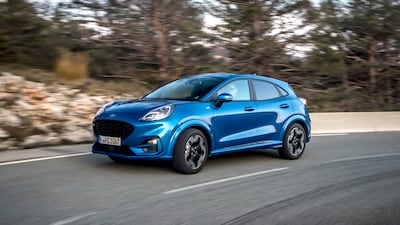
  • 3. Ford Puma - 8,528. Photo: Ford
    3. Ford Puma - 8,528. Photo: Ford
  • 4. Hyundai Tucson - 7,889. AP Photo
    4. Hyundai Tucson - 7,889. AP Photo
  • 5. Mini - 7,860. Photo: Mini
    5. Mini - 7,860. Photo: Mini
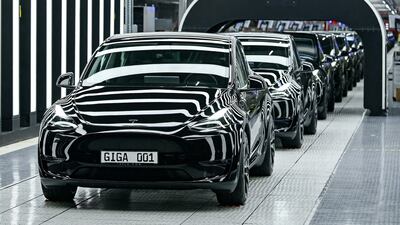
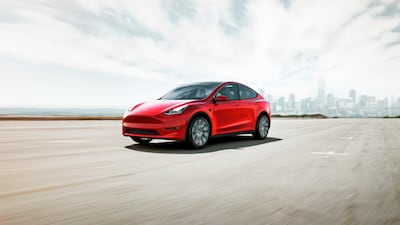
  • 6. Tesla Model Y - 7,774. Reuters
    6. Tesla Model Y - 7,774. Reuters
  • 7. Tesla Model 3 - 7,773. AP Photo
    7. Tesla Model 3 - 7,773. AP Photo
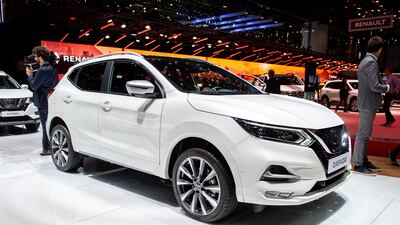
  • 8. Nissan Qashqai - 7,531. Getty Images
    8. Nissan Qashqai - 7,531. Getty Images
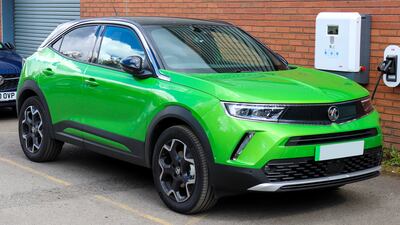
  • 9. Vauxhall Mokka - 7,395. Photo: Wikimedia Commons
    9. Vauxhall Mokka - 7,395. Photo: Wikimedia Commons
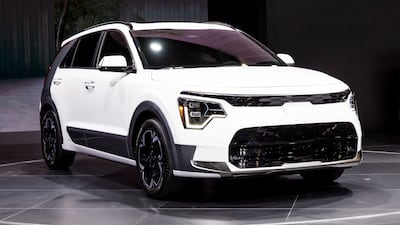
  • 10. Kia Niro - 7,194. EPA
    10. Kia Niro - 7,194. EPA

"The longest lead times are now on the cheapest cars," said Steve Young, managing director of the International Car Distribution Programme.

Ford is not the only manufacturer whose forecourts are no longer crowded. Giant lots with rows of cars awaiting a willing buyer are a thing of the past. Motorists expecting to walk into any showroom and leave with a new car are likely to be sorely disappointed.

This remarkable situation doesn't have a single root cause. It is part of a seismic change in the global motor industry brought about by several factors, from supply shortages and environmental factors to war and changing consumer preference.

Like many other industrial reformations, it has been catalysed by the coronavirus pandemic. It coincided with what Mike Hawes, chief executive of the Society of Motor Manufacturers, describes as the industry's “biggest change in 100 years” ― electrification.

“We’re in uncharted waters in terms of manufacturing, supplies, supply chain and retail,” he told The National.

Generational industrial change doesn’t come cheap, and so the Covid hit on automotive revenues was inauspiciously timed.

In 2019, the global automotive industry sold 91,227,182 new passenger and commercial vehicles, data from the International Organisation of Motor Vehicle Manufacturers shows.

Just 12 months later, the figure had plunged 14 per cent to 78,774,320.

The industry staged a minor comeback in 2021, creeping up 4.96 per cent to 82,684,778.

Yet this is still the loss of a 10th of new-car sales in just two years, almost unfathomable in a sector that was calibrated to volume supply and jacked up by an addictive range of financing options.

In order to be sold, new vehicles by definition need to be produced, and in 2020 and 2021, the number of passenger cars made was more than 10 million fewer than in 2019, when 67,149,196 rolled off the production lines, OICA data shows.

The shortfall is enduring and pervasive.

In the UK, figures released by the SMMT at the end of April show car manufacturing declined 32.4 per cent during the first three months of 2022, with almost 100,000 fewer units made than in the same period last year. This does not bode well given car production in Britain plummeted to a 65-year low in July 2021.

Chances of a full recovery in 2022 are slim to none. Even as the pandemic's worst days appeared to be receding, in its wake a swirl of intractable challenges have been left behind ― from a global materials shortage to rampant energy costs.

Risks from Russia

The conflict in Russia and Ukraine has turned this swirl into a maelstrom.

“The most significant [risk impact-wise] would be if gas supplies are disrupted to Germany and other countries that host assembly and supplier plants,” Mr Young said.

“Germany is a bigger user, and more dependent on Russian gas than some of the other countries. Supply shortages that led to gas being rationed to industrial users would be hugely disruptive.”

Russian sanctions “will affect the global availability and pricing on a number of key raw materials, including some that are key to catalyst production”, he said.

When the chips are down

The one component that has monopolised coverage when it comes to a global shortage is the semiconductor.

The shortage cost the industry $210 billion in revenue and lost production of 7.7 million vehicles in 2021, consultant AlixPartners estimated.

Yet semiconductor woes have been merely the "chip" of the iceberg.

“It goes deeper than semiconductors,” Philip Nothard, insight and strategy director at Cox Automotive, told The National.

“You’re talking about magnesium, you're talking about aluminium, water, leather,” he said.

“And the automotive industry is up against many other industries for the same materials.”

Mr Nothard acknowledged that semiconductors were “the big one” by dint of the number of raw materials it takes to make them and that demand for them went up during the pandemic as a result of the acceleration in the electronic goods industry spawned by lockdowns.

The shortage of components such as semiconductors and wiring looms ― the latter being heavily manufactured in Ukraine ― has forced vehicle manufacturers to radically alter their business models.

“The chip shortage seems likely to have an effect continuing into 2023 for most manufacturers, and this has led some to drop models from their product range and refocus on highest margin variants, albeit with reduced features where these are chip-intensive ― effectively, where is the best return on your chips,” Mr Young said.

Semiconductor chips, left, and electrical wiring looms, right, have been lesser-spotted commodities in recent times. Reuters; Getty Images

Motor industry makes margin call

The change of tack has led to Porsche dropping adaptive headlamps as an option for Taycan, Nissan leaving out navigation systems on thousands of vehicles that usually feature them, and Renault reducing the size of the digital screen on its Arkana SUV.

It is the prioritisation of higher margin variants that has flipped the industry on its head, and created the longest lead times now associated with cheaper, lower margin cars, such as the Fiesta.

The desertion of the mass market by the mainstream manufacturers leaves a gap for new players from the East.

“Look across the world at vehicles coming from China … they have low overhead costs and the economies of scale from their domestic markets could transfer across,” said the SMMT’s Mike Hawes.

“We know there are a lot of Chinese brands looking at entering the UK and European markets.”

One such brand is MG. Owned by Saic Motor, China’s largest vehicle manufacturer, the lower cost MG could well help shape the future of the automotive industry.

“[Such vehicles] may become the affordable, accessible volume vehicle in the UK market,” said Cox’s Philip Nothard.

An automotive paradox is born

The switch from volume manufacturing to high-margin vehicles created an automotive paradox: the industry is selling fewer cars yet is more profitable.

Volume manufacturing has been the industry’s core precept for years. The more cars that are made, the more parts that are required to make them, the more jobs that are created around their manufacture, and the more revenue that is generated for all stakeholders. In essence, the volume model drove the industry’s colossal economic footprint.

Yet with the pandemic and global materials shortages shattering that model, the industry adapted to survive. Profitability became the watchword du jour.

The focus on producing only top-of-the-range cars has increased the margin on each new vehicle sale, a trend amplified by more cars being sold to private motorists.

“Normally in the UK [the split] is around 50 per cent private, 50 per cent business and fleet,” Mr Hawes said.

“Private retail is a higher margin sales channel than fleet because you give a discount to fleets because they're buying in bulk."

A further dynamic is the shortage of new cars has led to used-car prices rocketing. Last year in the UK they increased by 30 per cent as demand grew. The demand has extended beyond conventional engine vehicles too.

Sales of used battery electric vehicles in the UK grew from 6,625 to 14,586 between January and March 2022, a rise of 120.2 per cent from a year earlier, according the SMMT. Sales of plug-in hybrids and hybrids totalled nearly 50,000 vehicles.

In all, UK sales of used cars in the first three months of the year grew to 1,774,351 from 1,687,755 in 2021, an increase of 5.1 per cent.

The end of target culture?

One British dealer who has been hugely appreciative of the shift from volume to profitability is Robin Luscombe, managing director of Luscombe Motors in Leeds.

“It’s brilliant,” he told The National.

“We're not in an oversupply situation. We're not driven by targets. Targets create bad habits.

“It's making the manufacturers normal. It's making the dealers normal. And it’s actually preserving the residual value of the customers’ cars because nobody is dumping loads of products into the market at ridiculously cheap prices."

Mr Luscombe’s delight at this new age of profit isn’t completely untempered, however.

“It comes with all sorts of problems," he said. "You can't walk into a dealership and say, ‘Can I have a car?’

"[Now we say] 'You can have one, we’ll order it for you, but it might take two, three, four months ― some of them might be in six, 12 or 18 months. That becomes a problem.”

A Luscombe Motors forecourt where proprietor and employees alike are thrilled at having fewer cars to sell. Photo: Luscombe Motors

Those at the coalface of this problem are the car salespeople.

"It’s been very challenging,” Andrew Milliken, senior account manager at Balgores Car & Van Leasing, told The National.

“In pre-Covid times you would always have loads of stock of a particular manufacturer.

“Ford would come out and say, ‘Oh, we've just had 100 Fiestas come through. Do you want to buy them and we'll give you 25 per cent discount if you take them all.’ This obviously completely died a death.”

To mitigate against stock shortages, Mr Milliken has changed his customer approach.

"Whereas before when we'd have renewals coming up for people coming out of lease it was for three-month periods," he said. "Now it's calling people six to nine months before the end of their agreement, minimum.”

Switching models

There is no blueprint for changing the way the industry works, Mr Nothard said.

“Many of the manufacturers don't exactly know what they're doing and how they're going to do it, but they know they've got to do it.

“Now a lot of that is about having access to that vehicle for longer. So there's a move away from producing the vehicle, pushing it out the factory gates, and then it going on somebody else’s funding while [the manufacturer] makes another one.

“They can't do that in the world of electric cars: the materials are not there and the profitability is not there. So they've got to make fewer vehicles but earn a better and a longer return on that asset."

Tesla has moved from niche product into the vanguard of industry electrification.

To achieve this, manufacturers are planning to "have a more direct relationship with the user of their vehicles for longer”, Mr Nothard said.

This effectively means that instead of the dealer or wholesaler taking all the profits from things like servicing, financing and upgrades, the vehicle manufacturer will now try to extract revenue throughout the vehicle’s life cycle.

Death of a car salesman?

Superficially, such a model appears ominous to dealers. Although Mr Nothard does not think their death knell needs tolling just yet.

“Manufacturers historically have never been good at retailing cars,” he said.

“They try to do it and they're good at marketing and customer relationships, but they're not very good at selling, and they're not very good at stock management and that kind of world."

He says there is a place for both but the relationship will change.

As an example he used Mercedes, which is switching to an agency model in Europe on January 1 next year.

At this point, every official Mercedes vendor in the region will be paid a commission by the manufacturer for each vehicle they sell, service they offer and upgrade they install.

Manufacturers will electrify and it will happen quickly
Mike Hawes,
SMMT

Whether this shift will result in dealers-cum-agents being less or more profitable remains to be seen.

What is certain is that there will be fewer of them.

There has already been a marked shift in the industry to online sales, with the likes of Carwow, Cinch and Cazoo in the vanguard in the UK. The shift has meant manufacturers simply don’t need as many physical outlets. Instead, the focus has been on building larger showcase outlets in regional centres.

That said, Mr Nothard did point out several companies who started off solely as online sellers, like Cazoo, are now investing in bricks and mortar in recognition that customers still like to come in and test drive cars before buying them, and have a convenient place to take them for repairs should things go wrong.

Automotive's electric dreams

The drive to consolidation, then, was already happening before being turbocharged by Covid, because of electrification.

“At the moment, you've got something like 114 different electrified models on the UK market,” Mr Hawes said.

“From a UK perspective, all our manufacturers are looking at making hybrids and some of them already make electric vehicles. In the end all of them will have to, but the question is, at what pace do you get there?”

Nissan Ariya electric crossover sport utility vehicles being assembled by robots at the company's plant in Japan. Bloomberg

He described the shift as “the biggest change in a century” ― and it won’t come cheap.

“How do you afford that?” Mr Hawes said. “You need to maintain revenue. You’re looking at every opportunity to increase your incomes, hence [selling] higher margin vehicles.

Job losses inevitable

The component sector could be an early victim.

In December 2021, the European automotive suppliers’ association, Clepa, released a report forecasting that more than half a million jobs in the supply chain could be lost in internal combustion engine powertrain components production by 2035.

While vehicular and infrastructural electrification will create new jobs, they won’t be enough to compensate for such swingeing losses.

“You need a strong vehicle manufacturer so you can see that opportunities are there," Mr Hawes said.

“You also need support reskilling and helping companies identify market opportunities.”

What is clear is that the automotive industry has an arduous journey ahead. How it emerges will have a bearing on far more than the industry alone. In the meantime, good luck finding that new car.

Bestselling cars in the UAE - in pictures

  • Toyota Camry. Chris Whiteoak / The National
    Toyota Camry. Chris Whiteoak / The National
  • Toyota Corolla. Photo: Toyota
    Toyota Corolla. Photo: Toyota
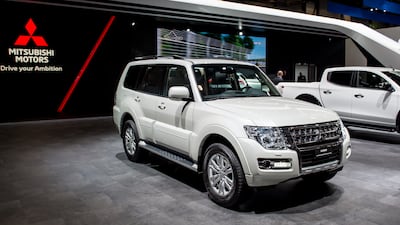
  • Mitsubishi Pajero. Getty Images
    Mitsubishi Pajero. Getty Images
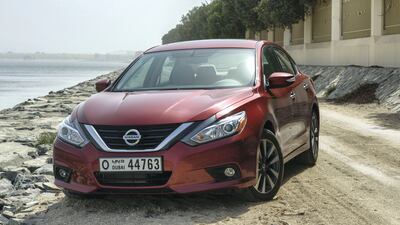
  • Nissan Altima. Khushnum Bhandari / The National
    Nissan Altima. Khushnum Bhandari / The National
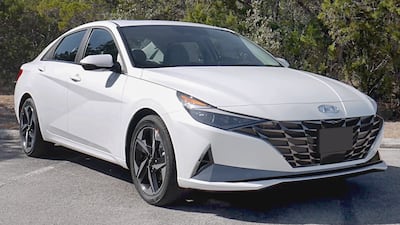
  • Hyundai Elantra. Photo: Wikimedia Commons
    Hyundai Elantra. Photo: Wikimedia Commons
  • Nissan Patrol. Photo: Nissan
    Nissan Patrol. Photo: Nissan
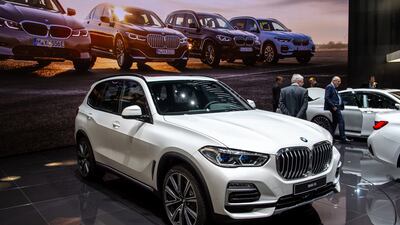
  • BMW X5. Getty Images
    BMW X5. Getty Images
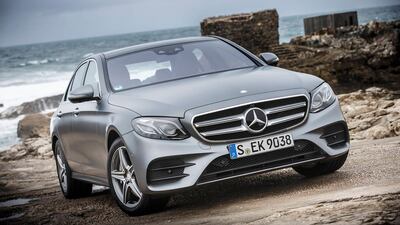
  • Mercedes E-Class. Photo: Daimler AG
    Mercedes E-Class. Photo: Daimler AG
MOUNTAINHEAD REVIEW

Starring: Ramy Youssef, Steve Carell, Jason Schwartzman

Director: Jesse Armstrong

Rating: 3.5/5

Ferrari 12Cilindri specs

Engine: naturally aspirated 6.5-liter V12

Power: 819hp

Torque: 678Nm at 7,250rpm

Price: From Dh1,700,000

Available: Now

Tips on buying property during a pandemic

Islay Robinson, group chief executive of mortgage broker Enness Global, offers his advice on buying property in today's market.

While many have been quick to call a market collapse, this simply isn’t what we’re seeing on the ground. Many pockets of the global property market, including London and the UAE, continue to be compelling locations to invest in real estate.

While an air of uncertainty remains, the outlook is far better than anyone could have predicted. However, it is still important to consider the wider threat posed by Covid-19 when buying bricks and mortar. 

Anything with outside space, gardens and private entrances is a must and these property features will see your investment keep its value should the pandemic drag on. In contrast, flats and particularly high-rise developments are falling in popularity and investors should avoid them at all costs.

Attractive investment property can be hard to find amid strong demand and heightened buyer activity. When you do find one, be prepared to move hard and fast to secure it. If you have your finances in order, this shouldn’t be an issue.

Lenders continue to lend and rates remain at an all-time low, so utilise this. There is no point in tying up cash when you can keep this liquidity to maximise other opportunities. 

Keep your head and, as always when investing, take the long-term view. External factors such as coronavirus or Brexit will present challenges in the short-term, but the long-term outlook remains strong. 

Finally, keep an eye on your currency. Whenever currency fluctuations favour foreign buyers, you can bet that demand will increase, as they act to secure what is essentially a discounted property.

How to watch Ireland v Pakistan in UAE

When: The one-off Test starts on Friday, May 11
What time: Each day’s play is scheduled to start at 2pm UAE time.
TV: The match will be broadcast on OSN Sports Cricket HD. Subscribers to the channel can also stream the action live on OSN Play.

Dates for the diary

To mark Bodytree’s 10th anniversary, the coming season will be filled with celebratory activities:

  • September 21 Anyone interested in becoming a certified yoga instructor can sign up for a 250-hour course in Yoga Teacher Training with Jacquelene Sadek. It begins on September 21 and will take place over the course of six weekends.
  • October 18 to 21 International yoga instructor, Yogi Nora, will be visiting Bodytree and offering classes.
  • October 26 to November 4 International pilates instructor Courtney Miller will be on hand at the studio, offering classes.
  • November 9 Bodytree is hosting a party to celebrate turning 10, and everyone is invited. Expect a day full of free classes on the grounds of the studio.
  • December 11 Yogeswari, an advanced certified Jivamukti teacher, will be visiting the studio.
  • February 2, 2018 Bodytree will host its 4th annual yoga market.

Anghami
Started: December 2011
Co-founders: Elie Habib, Eddy Maroun
Based: Beirut and Dubai
Sector: Entertainment
Size: 85 employees
Stage: Series C
Investors: MEVP, du, Mobily, MBC, Samena Capital

UAE currency: the story behind the money in your pockets
Karwaan

Producer: Ronnie Screwvala

Director: Akarsh Khurana

Starring: Irrfan Khan, Dulquer Salmaan, Mithila Palkar

Rating: 4/5

The specs: 2018 Mercedes-Benz E 300 Cabriolet

Price, base / as tested: Dh275,250 / Dh328,465

Engine: 2.0-litre four-cylinder

Power: 245hp @ 5,500rpm

Torque: 370Nm @ 1,300rpm

Transmission: Nine-speed automatic

Fuel consumption, combined: 7.0L / 100km

MATCH INFO

First Test at Barbados
West Indies won by 381 runs

Second Test at Antigua
West Indies won by 10 wickets

Third Test at St Lucia
February 9-13


KLOPP%20AT%20LIVERPOOL
%3Cp%3EYears%3A%20October%202015%20-%20June%202024%3Cbr%3ETotal%20games%3A%20491%3Cbr%3EWin%20percentage%3A%2060.9%25%3Cbr%3EMajor%20trophies%3A%206%20(Premier%20League%20x%201%2C%20Champions%20League%20x%201%2C%20FA%20Cup%20x%201%2C%20League%20Cup%20x%202%2C%20Fifa%20Club%20World%20Cup%20x1)%3C%2Fp%3E%0A
TECH%20SPECS%3A%20APPLE%20IPHONE%2014%20PLUS
%3Cp%3E%3Cstrong%3EDisplay%3A%3C%2Fstrong%3E%206.1%22%20Super%20Retina%20XDR%20OLED%2C%202778%20x%201284%2C%20458ppi%2C%20HDR%2C%20True%20Tone%2C%20P3%2C%201200%20nits%3C%2Fp%3E%0A%3Cp%3E%3Cstrong%3EProcessor%3A%3C%2Fstrong%3E%20A15%20Bionic%2C%206-core%20CPU%2C%205-core%20GPU%2C%2016-core%20Neural%20Engine%C2%A0%3C%2Fp%3E%0A%3Cp%3E%3Cstrong%3EMemory%3A%3C%2Fstrong%3E%206GB%3C%2Fp%3E%0A%3Cp%3E%3Cstrong%3ECapacity%3A%3C%2Fstrong%3E%20128%2F256%2F512GB%3C%2Fp%3E%0A%3Cp%3E%3Cstrong%3EPlatform%3A%3C%2Fstrong%3E%20iOS%2016%3C%2Fp%3E%0A%3Cp%3E%3Cstrong%3EMain%20camera%3A%3C%2Fstrong%3E%20Dual%2012MP%20main%20(f%2F1.5)%20%2B%2012MP%20ultra-wide%20(f%2F2.4)%3B%202x%20optical%2C%205x%20digital%3B%20Photonic%20Engine%2C%20Deep%20Fusion%2C%20Smart%20HDR%204%2C%20Portrait%20Lighting%3C%2Fp%3E%0A%3Cp%3E%3Cstrong%3EMain%20camera%20video%3A%3C%2Fstrong%3E%204K%20%40%2024%2F25%2F3060fps%2C%20full-HD%20%40%2025%2F30%2F60fps%2C%20HD%20%40%2030fps%3B%20HD%20slo-mo%20%40%20120%2F240fps%3B%20night%2C%20time%20lapse%2C%20cinematic%2C%20action%20modes%3B%20Dolby%20Vision%2C%204K%20HDR%3C%2Fp%3E%0A%3Cp%3E%3Cstrong%3EFront%20camera%3A%3C%2Fstrong%3E%2012MP%20TrueDepth%20(f%2F1.9)%2C%20Photonic%20Engine%2C%20Deep%20Fusion%2C%20Smart%20HDR%204%3B%20Animoji%2C%20Memoji%3B%20Portrait%20Lighting%3C%2Fp%3E%0A%3Cp%3E%3Cstrong%3EFront%20camera%20video%3A%3C%2Fstrong%3E%204K%20%40%2024%2F25%2F3060fps%2C%20full-HD%20%40%2025%2F30%2F60fps%2C%20HD%20slo-mo%20%40%20120fps%3B%20night%2C%20time%20lapse%2C%20cinematic%2C%20action%20modes%3B%20Dolby%20Vision%2C%204K%20HDR%3C%2Fp%3E%0A%3Cp%3E%3Cstrong%3EBattery%3A%3C%2Fstrong%3E%204323%20mAh%2C%20up%20to%2026h%20video%2C%2020h%20streaming%20video%2C%20100h%20audio%3B%20fast%20charge%20to%2050%25%20in%2030m%3B%20MagSafe%2C%20Qi%20wireless%20charging%3C%2Fp%3E%0A%3Cp%3E%3Cstrong%3EConnectivity%3A%3C%2Fstrong%3E%20Wi-Fi%2C%20Bluetooth%205.3%2C%20NFC%20(Apple%20Pay)%3C%2Fp%3E%0A%3Cp%3E%3Cstrong%3EBiometrics%3A%3C%2Fstrong%3E%20Face%20ID%3C%2Fp%3E%0A%3Cp%3E%3Cstrong%3EI%2FO%3A%3C%2Fstrong%3E%20Lightning%3C%2Fp%3E%0A%3Cp%3E%3Cstrong%3ECards%3A%3C%2Fstrong%3E%20Dual%20eSIM%20%2F%20eSIM%20%2B%20SIM%20(US%20models%20use%20eSIMs%20only)%3C%2Fp%3E%0A%3Cp%3E%3Cstrong%3EColours%3A%3C%2Fstrong%3E%20Blue%2C%20midnight%2C%20purple%2C%20starlight%2C%20Product%20Red%3C%2Fp%3E%0A%3Cp%3E%3Cstrong%3EIn%20the%20box%3A%3C%2Fstrong%3E%20iPhone%2014%2C%20USB-C-to-Lightning%20cable%2C%20one%20Apple%20sticker%3C%2Fp%3E%0A%3Cp%3E%3Cstrong%3EPrice%3A%3C%2Fstrong%3E%20Dh3%2C799%20%2F%20Dh4%2C199%20%2F%20Dh5%2C049%3C%2Fp%3E%0A

Mercer, the investment consulting arm of US services company Marsh & McLennan, expects its wealth division to at least double its assets under management (AUM) in the Middle East as wealth in the region continues to grow despite economic headwinds, a company official said.

Mercer Wealth, which globally has $160 billion in AUM, plans to boost its AUM in the region to $2-$3bn in the next 2-3 years from the present $1bn, said Yasir AbuShaban, a Dubai-based principal with Mercer Wealth.

Within the next two to three years, we are looking at reaching $2 to $3 billion as a conservative estimate and we do see an opportunity to do so,” said Mr AbuShaban.

Mercer does not directly make investments, but allocates clients’ money they have discretion to, to professional asset managers. They also provide advice to clients.

“We have buying power. We can negotiate on their (client’s) behalf with asset managers to provide them lower fees than they otherwise would have to get on their own,” he added.

Mercer Wealth’s clients include sovereign wealth funds, family offices, and insurance companies among others.

From its office in Dubai, Mercer also looks after Africa, India and Turkey, where they also see opportunity for growth.

Wealth creation in Middle East and Africa (MEA) grew 8.5 per cent to $8.1 trillion last year from $7.5tn in 2015, higher than last year’s global average of 6 per cent and the second-highest growth in a region after Asia-Pacific which grew 9.9 per cent, according to consultancy Boston Consulting Group (BCG). In the region, where wealth grew just 1.9 per cent in 2015 compared with 2014, a pickup in oil prices has helped in wealth generation.

BCG is forecasting MEA wealth will rise to $12tn by 2021, growing at an annual average of 8 per cent.

Drivers of wealth generation in the region will be split evenly between new wealth creation and growth of performance of existing assets, according to BCG.

Another general trend in the region is clients’ looking for a comprehensive approach to investing, according to Mr AbuShaban.

“Institutional investors or some of the families are seeing a slowdown in the available capital they have to invest and in that sense they are looking at optimizing the way they manage their portfolios and making sure they are not investing haphazardly and different parts of their investment are working together,” said Mr AbuShaban.

Some clients also have a higher appetite for risk, given the low interest-rate environment that does not provide enough yield for some institutional investors. These clients are keen to invest in illiquid assets, such as private equity and infrastructure.

“What we have seen is a desire for higher returns in what has been a low-return environment specifically in various fixed income or bonds,” he said.

“In this environment, we have seen a de facto increase in the risk that clients are taking in things like illiquid investments, private equity investments, infrastructure and private debt, those kind of investments were higher illiquidity results in incrementally higher returns.”

The Abu Dhabi Investment Authority, one of the largest sovereign wealth funds, said in its 2016 report that has gradually increased its exposure in direct private equity and private credit transactions, mainly in Asian markets and especially in China and India. The authority’s private equity department focused on structured equities owing to “their defensive characteristics.”

Other acts on the Jazz Garden bill

Sharrie Williams
The American singer is hugely respected in blues circles due to her passionate vocals and songwriting. Born and raised in Michigan, Williams began recording and touring as a teenage gospel singer. Her career took off with the blues band The Wiseguys. Such was the acclaim of their live shows that they toured throughout Europe and in Africa. As a solo artist, Williams has also collaborated with the likes of the late Dizzy Gillespie, Van Morrison and Mavis Staples.
Lin Rountree
An accomplished smooth jazz artist who blends his chilled approach with R‘n’B. Trained at the Duke Ellington School of the Arts in Washington, DC, Rountree formed his own band in 2004. He has also recorded with the likes of Kem, Dwele and Conya Doss. He comes to Dubai on the back of his new single Pass The Groove, from his forthcoming 2018 album Stronger Still, which may follow his five previous solo albums in cracking the top 10 of the US jazz charts.
Anita Williams
Dubai-based singer Anita Williams will open the night with a set of covers and swing, jazz and blues standards that made her an in-demand singer across the emirate. The Irish singer has been performing in Dubai since 2008 at venues such as MusicHall and Voda Bar. Her Jazz Garden appearance is career highlight as she will use the event to perform the original song Big Blue Eyes, the single from her debut solo album, due for release soon.

CABINET%20OF%20CURIOSITIES%20EPISODE%201%3A%20LOT%2036
%3Cp%3E%3Cstrong%3EDirector%3A%20%3C%2Fstrong%3EGuillermo%20del%20Toro%3Cbr%3E%3Cstrong%3EStars%3A%3C%2Fstrong%3E%20Tim%20Blake%20Nelson%2C%20Sebastian%20Roche%2C%20Elpidia%20Carrillo%3Cbr%3ERating%3A%204%2F5%3C%2Fp%3E%0A
Dengue%20fever%20symptoms
%3Cul%3E%0A%3Cli%3EHigh%20fever%3C%2Fli%3E%0A%3Cli%3EIntense%20pain%20behind%20your%20eyes%3C%2Fli%3E%0A%3Cli%3ESevere%20headache%3C%2Fli%3E%0A%3Cli%3EMuscle%20and%20joint%20pains%3C%2Fli%3E%0A%3Cli%3ENausea%3C%2Fli%3E%0A%3Cli%3EVomiting%3C%2Fli%3E%0A%3Cli%3ESwollen%20glands%3C%2Fli%3E%0A%3Cli%3ERash%3C%2Fli%3E%0A%3C%2Ful%3E%0A%3Cp%3EIf%20symptoms%20occur%2C%20they%20usually%20last%20for%20two-seven%20days%3C%2Fp%3E%0A
Griselda
%3Cp%3E%3Cstrong%3EDirector%3A%3C%2Fstrong%3E%C2%A0Andr%C3%A9s%20Baiz%3C%2Fp%3E%0A%3Cp%3E%3Cstrong%3EStarring%3A%C2%A0%3C%2Fstrong%3ESof%C3%ADa%20Vergara%2C%20Alberto%20Guerra%2C%20Juliana%20Aiden%20Martinez%3C%2Fp%3E%0A%3Cp%3E%3Cstrong%3ERating%3A%3C%2Fstrong%3E%204%2F5%3C%2Fp%3E%0A
Dhadak 2

Director: Shazia Iqbal

Starring: Siddhant Chaturvedi, Triptii Dimri 

Rating: 1/5

Results

57kg quarter-finals

Zakaria Eljamari (UAE) beat Hamed Al Matari (YEM) by points 3-0.

60kg quarter-finals

Ibrahim Bilal (UAE) beat Hyan Aljmyah (SYR) RSC round 2.

63.5kg quarter-finals

Nouredine Samir (UAE) beat Shamlan A Othman (KUW) by points 3-0.

67kg quarter-finals

Mohammed Mardi (UAE) beat Ahmad Ondash (LBN) by points 2-1.

71kg quarter-finals

Ahmad Bahman (UAE) defeated Lalthasanga Lelhchhun (IND) by points 3-0.

Amine El Moatassime (UAE) beat Seyed Kaveh Safakhaneh (IRI) by points 3-0.

81kg quarter-finals

Ilyass Habibali (UAE) beat Ahmad Hilal (PLE) by points 3-0

Results

5.30pm: Maiden (TB) Dh82,500 (Turf) 1,400m; Winner: Mcmanaman, Sam Hitchcock (jockey), Doug Watson (trainer)

6.05pm: Handicap (TB) Dh87,500 (T) 1,400m; Winner: Bawaasil, Sam Hitchcott, Doug Watson

6.40pm: Handicap (TB) Dh105,000 (Dirt) 1,400m; Winner: Bochart, Fabrice Veron, Satish Seemar

7.15pm: Handicap (TB) Dh105,000 (T) 1,200m; Winner: Mutaraffa, Antonio Fresu, Musabah Al Muhairi

7.50pm: Longines Stakes – Conditions (TB) Dh120,00 (D) 1,900m; Winner: Rare Ninja, Royston Ffrench, Salem bin Ghadayer

8.25pm: Zabeel Trophy – Rated Conditions (TB) Dh120,000 (T) 1,600m; Winner: Alfareeq, Antonio Fresu, Musabah Al Muhairi

9pm: Handicap (TB) Dh105,000 (T) 2,410m; Winner: Good Tidings, Antonio Fresu, Musabah Al Muhairi

9.35pm: Handicap (TB) Dh92,500 (T) 2,000m; Winner: Zorion, Abdul Aziz Al Balushi, Helal Al Alawi


Updated: May 16, 2022, 1:58 PM